How Startups Can Build Technology Without Hiring a Large IT Team
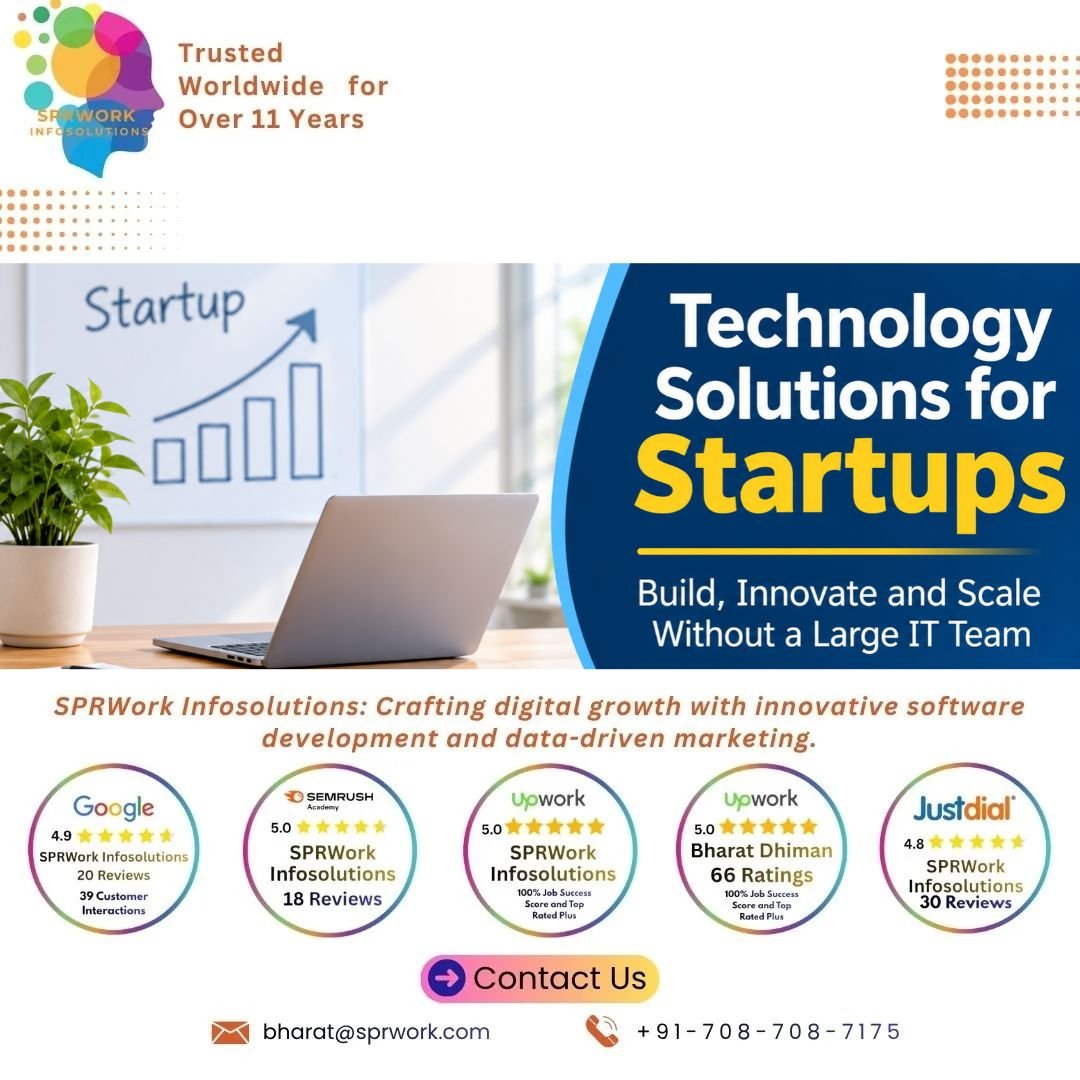
Starting a business often requires significant investment in technology, but hiring a large in-house IT team is not always practical for startups. From website development and mobile applications to software systems and AI-powered solutions, technology plays an important role in building and scaling a business. However, startups can build reliable technology infrastructure without increasing their operational expenses through smart planning and the right development approach.
1. Start With the Essential Technology Requirements
Before investing in technology, startups should identify their actual business requirements. Instead of developing multiple tools and platforms at once, focus on essential solutions that support daily operations and customer needs.
For example, a startup might initially need a business website, a customer management system, and a basic mobile application. Additional features can be introduced as the business grows. This approach helps control development costs and avoids unnecessary technical complexity.

2. Work With Dedicated Development Teams
Hiring individual developers for every technology requirement can increase recruitment, training, and employee management costs. Dedicated development teams offer an alternative by providing access to professionals with different technical skills.
Startups can work with developers, designers, and project managers based on their project requirements. This makes it easier to manage development activities without maintaining a large permanent IT department.
3. Use AI to Automate Business Processes
Artificial intelligence is helping startups reduce manual work and improve operational efficiency. AI-powered tools can support customer communication, data processing, reporting, workflow management, and other repetitive activities.
By integrating AI into everyday business operations, startups can complete tasks faster while allowing smaller teams to focus on important business activities. AI integration can also help businesses build smarter applications and improve their overall technology infrastructure.
4. Choose Scalable Technology Solutions
Startups should invest in technology that can support future business growth. Selecting scalable software architecture, cloud infrastructure, and flexible development frameworks can make it easier to introduce new features and handle increasing workloads.
Rather than rebuilding systems as the business expands, scalable solutions allow startups to improve their existing technology infrastructure gradually.
5. Outsource Specialized Technology Requirements
Not every startup needs full-time specialists for every technical requirement. Outsourcing services such as web development, app development, software development, and AI integration can provide access to experienced professionals when needed.
This approach helps startups reduce fixed employee expenses while maintaining access to technical expertise. It also allows founders to focus more on business strategy, customer relationships, and growth.
6. Focus on Integration Instead of Multiple Tools
Using too many disconnected applications can create operational challenges. Startups should focus on integrating their essential business systems so information can move smoothly between different platforms.
For example, connecting customer management software with communication tools, payment systems, and reporting platforms can reduce manual data entry and improve workflow efficiency.
Building technology does not always require a large in-house IT department. Startups can develop reliable and scalable technology infrastructure by working with dedicated development teams, adopting AI-powered solutions, outsourcing specialized requirements, and choosing flexible software systems.
The key is to invest in the right technology at the right time.
SPRWORK Infosolutions helps businesses turn their technology ideas into practical solutions through web development, app development, software development, and AI integration services. With the right technology partner, startups can build, innovate, and scale without the complexity of maintaining a large IT team.
Frequently Asked Questions
1. Can a startup build technology without hiring an in-house IT team?
Yes. Startups can work with dedicated development teams, outsource technical requirements, and use AI-powered tools to build and manage their technology infrastructure without hiring a large permanent IT team.
2. What technology does a startup need in its early stages?
Most startups need a professional website, essential business software, customer management tools, secure data storage, and automation solutions. The exact requirements depend on their business model and goals.
3. Is outsourcing software development cost-effective for startups?
Yes. Outsourcing can reduce recruitment, employee training, and infrastructure expenses while providing access to experienced developers and specialized technical skills.
4. How can AI help startups reduce operational costs?
AI can automate repetitive tasks, assist with customer support, process business data, generate reports, and improve workflow management. This allows smaller teams to handle more work efficiently.
5. What is a dedicated development team?
A dedicated development team is a group of technology professionals assigned to work on a company’s projects. It may include developers, designers, testers, and project managers based on business requirements.
6. How can startups ensure their technology supports future growth?
Startups should choose scalable software architecture, flexible cloud infrastructure, secure systems, and solutions that support future integrations and feature expansion.
7. When should a startup hire its own IT team?
A startup should consider building an in-house IT team when its technology requirements become continuous, complex, and large enough to justify permanent technical staff.
 Previous Post

Latest Blogs

How Startups Can Build Technology Without Hiring a Large IT Team