How to Build a Scalable Digital Marketing System for Your Business
Building a successful business requires more than running occasional advertisements or posting regularly on social media. Businesses need a structured digital marketing system that attracts potential customers, builds trust, generates qualified leads, and supports long-term growth.
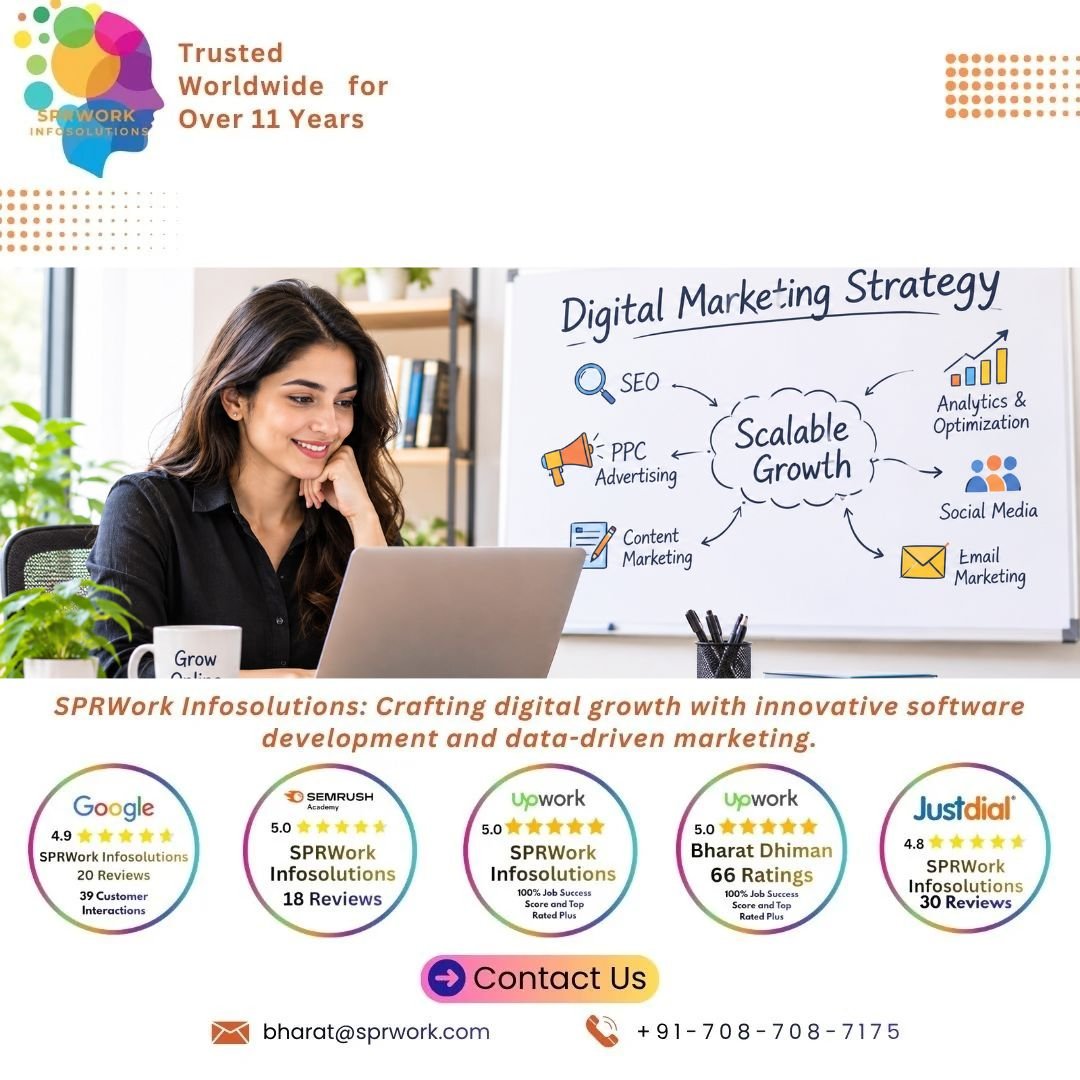
A scalable digital marketing system connects different marketing activities, including SEO, PPC advertising, content marketing, social media, website optimization, and AI-powered tools. Instead of managing each activity separately, businesses can create an integrated strategy that delivers consistent results as they grow.
With the right approach, companies can improve marketing efficiency, control costs, and reach new customers without continuously increasing their workload.
Need a digital marketing strategy that supports your business growth? Explore professional digital marketing solutions at SPRWORK Infosolutions.

1. Establish Clear Marketing Goals
The first step is identifying what your business wants to achieve through digital marketing. Without clear objectives, it becomes difficult to measure performance or decide where to invest resources.
Your goals might include increasing website traffic, generating qualified leads, improving brand awareness, increasing online sales, or entering new markets.
Set measurable targets for each objective. For example, you might aim to increase organic traffic by 30% within six months or generate 50 qualified enquiries every month.
Clear goals help your marketing team prioritize activities and measure actual business outcomes.
2. Build a Strong Website Foundation
Your website is the central part of your digital marketing system. Most marketing channels eventually direct potential customers to your website, where they learn about your services and decide whether to contact your business.
A scalable website should offer:
-
Fast loading speed and mobile-friendly design.
-
Clear navigation and service descriptions.
-
Strong landing pages with relevant information.
-
Simple enquiry and contact forms.
-
Clear calls to action.
-
Proper technical SEO implementation.
Your website should also be designed to accommodate future business expansion, including additional services, landing pages, and marketing campaigns.
3. Develop a Sustainable SEO Strategy
Search Engine Optimization (SEO) helps businesses attract potential customers through organic search results.
A sustainable SEO strategy focuses on building long-term visibility rather than chasing short-term ranking improvements.
Start with keyword research to understand what your potential customers are searching for. Create useful website content around relevant search queries, optimize service pages, improve internal linking, and maintain technical website health.
Businesses should also focus on local SEO when targeting customers in specific locations.
Consistent SEO activities can help establish authority, attract relevant visitors, and reduce long-term dependence on paid advertising.
4. Use PPC Advertising for Faster Lead Generation
While SEO builds long-term visibility, Pay-Per-Click (PPC) advertising can help businesses reach potential customers more quickly.
Platforms such as Google Ads and Meta Ads allow companies to target audiences based on their interests, locations, search intent, and other relevant factors.
To make PPC campaigns scalable:
-
Create separate campaigns for different services.
-
Use relevant keywords and audience targeting.
-
Develop dedicated landing pages.
-
Track conversions and qualified enquiries.
-
Regularly optimize advertising budgets.
The objective should not simply be to generate clicks. Focus on attracting potential customers who are more likely to become paying clients.
5. Create a Consistent Content Marketing System
Content marketing helps businesses educate their audiences, demonstrate expertise, and build trust.
Instead of publishing content randomly, create a structured content calendar that supports your marketing objectives.
Consider developing educational blogs, industry insights, service-related articles, case studies, social media posts, and informative videos.
Repurpose your content across multiple platforms to maximize its reach. For example, one detailed blog can become several social media posts, a short video, and an email newsletter.
This approach saves time while maintaining consistent communication with your audience.
6. Integrate AI and Marketing Automation
AI and automation can make digital marketing systems more efficient and scalable.
Businesses can use AI-powered tools to analyze marketing data, generate content ideas, identify customer trends, automate repetitive activities, and improve campaign optimization.
Marketing automation can also support lead management, email follow-ups, customer segmentation, and reporting.
For example, when someone submits an enquiry form, an automated workflow can record the lead, send an acknowledgement email, and notify the sales team.
Combining AI with automation helps businesses reduce manual work and focus more on strategic activities.
7. Track Performance and Optimize Regularly
A scalable marketing system requires continuous monitoring. Businesses should understand which channels are generating traffic, enquiries, conversions, and revenue.
Use tools such as Google Analytics 4, Google Search Console, advertising platform reports, and CRM systems to evaluate performance.
Important metrics include:
-
Website traffic and engagement.
-
Organic keyword rankings.
-
Cost per lead (CPL).
-
Conversion rate.
-
Customer acquisition cost (CAC).
-
Return on advertising spend (ROAS).
-
Lead-to-customer conversion rate.
Regular performance reviews help identify opportunities, eliminate ineffective activities, and allocate budgets more effectively.
8. Build a System That Can Grow With Your Business
A digital marketing strategy should evolve as your business expands.
Initially, you might focus on SEO and a few paid campaigns. As your business grows, you can introduce additional marketing channels, expand into new locations, develop dedicated marketing teams, and implement advanced automation systems.
Documenting workflows, defining responsibilities, and using centralized reporting tools can make it easier to manage increasing marketing activities.
The goal is to build a repeatable system that delivers consistent results without requiring businesses to rebuild their marketing strategy every time they grow.
Building a scalable digital marketing system requires the right combination of strategy, technology, content, advertising, and performance tracking.
Businesses that integrate SEO, PPC, content marketing, social media, and AI-powered automation can create a more organized approach to attracting and converting customers.
The key is to focus on measurable business outcomes, continuously improve marketing processes, and build a system that adapts to changing business requirements.
SPRWORK Infosolutions helps businesses strengthen their digital presence through digital marketing, SEO, PPC management, website development, and AI-powered business solutions. Build a marketing system designed to support your next stage of growth.
Frequently Asked Questions
1. What is a scalable digital marketing system?
A scalable digital marketing system is a structured approach that allows businesses to increase their marketing activities, reach more customers, and generate additional leads without proportionally increasing operational costs.
2. Which digital marketing channels should businesses focus on?
Businesses should consider SEO, PPC advertising, content marketing, social media marketing, and email marketing based on their target audience, industry, and objectives.
3. How does AI help scale digital marketing?
AI helps automate repetitive tasks, analyze customer behavior, generate content ideas, identify trends, and improve marketing campaign efficiency.
4. How long does it take to build a scalable digital marketing system?
The timeline depends on business goals, existing infrastructure, marketing budget, and available resources. Initial implementation may take a few weeks, while optimization is an ongoing process.
5. How can businesses measure digital marketing success?
Businesses can measure success through website traffic, qualified leads, conversion rates, customer acquisition costs, and return on investment.
 Previous Post

Latest Blogs
How to Build a Scalable Digital Marketing System for Your Business
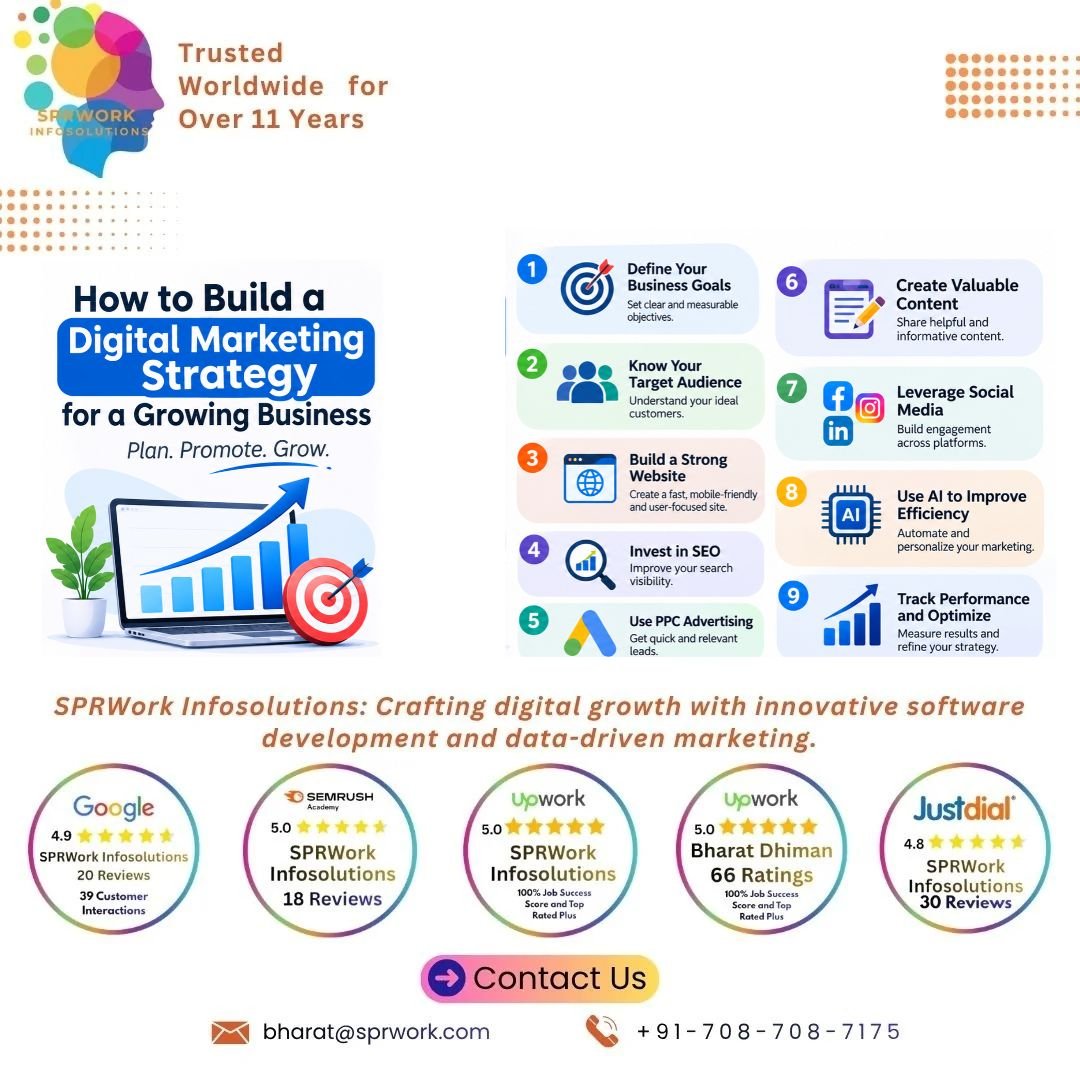
How to Build a Digital Marketing Strategy for a Growing Business