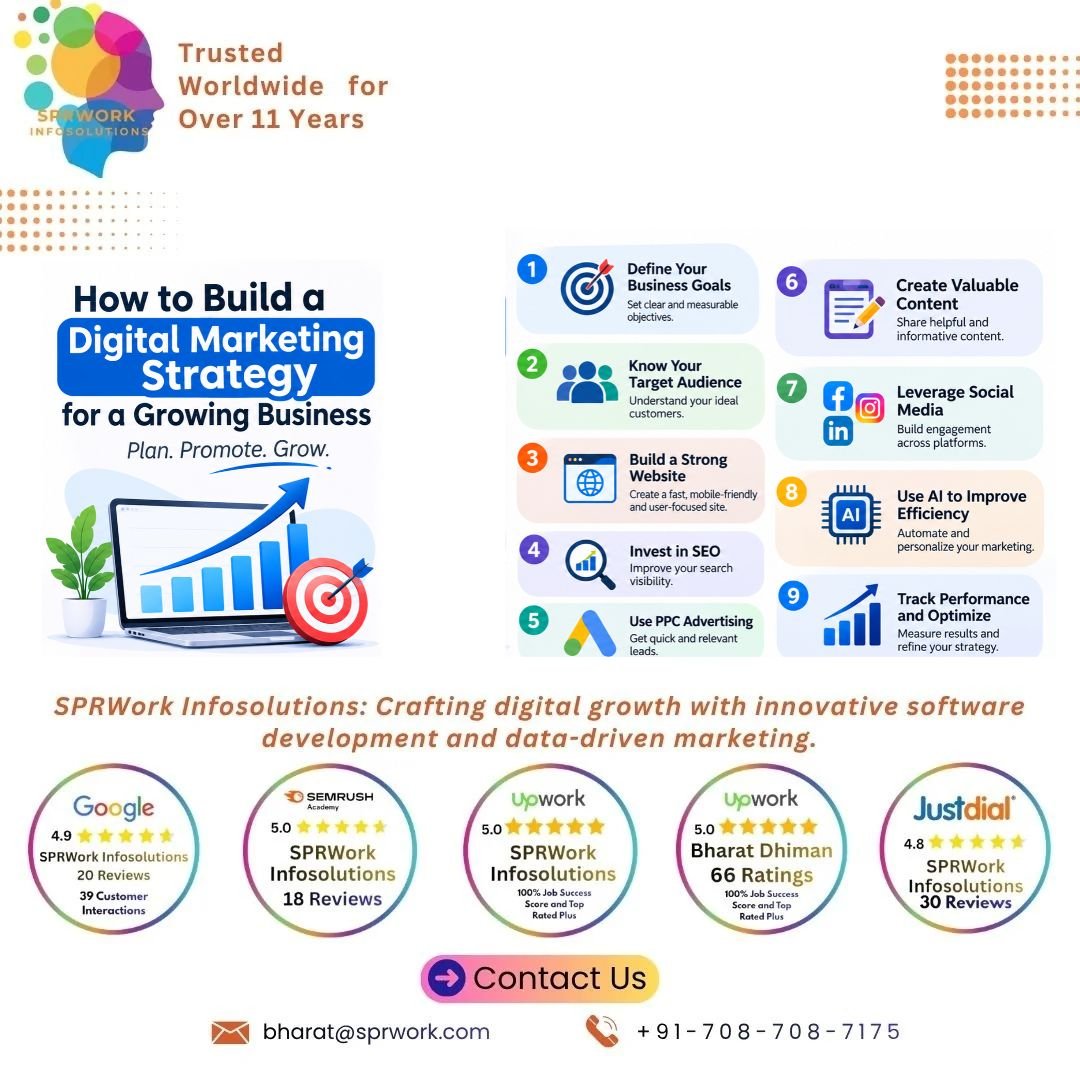
How to Build a Digital Marketing Strategy for a Growing Business
A strong digital marketing strategy is essential for businesses that want to increase their online visibility, attract potential customers, and generate consistent revenue. Simply having a website or posting on social media is not enough. Businesses need a clear marketing plan that connects the right audience with the right services through the right digital channels.
Whether you run a startup, small business, or established company, a well-planned digital marketing strategy can help you reach your business goals while making better use of your marketing budget.
At SPRWORK Infosolutions, we help businesses strengthen their online presence through digital marketing, SEO, PPC management, website development, and AI-powered business solutions. Our goal is to create strategies that support measurable business growth.
1. Define Your Business Goals
Before starting any marketing activity, identify what you want to achieve. Every business has different objectives, and your digital marketing strategy should reflect them.
Some common business goals include:
-
Increasing website traffic and online visibility.
-
Generating quality leads and enquiries.
-
Improving brand awareness.
-
Increasing sales and customer retention.
-
Expanding into new markets.
Set clear and measurable goals so you can track your progress and understand which marketing activities are delivering results.
2. Understand Your Target Audience
Understanding your audience is one of the most important steps in building an effective marketing strategy.
Identify who your potential customers are, what problems they face, and what solutions they are looking for.
Consider factors such as:
-
Age group and location.
-
Interests and preferences.
-
Buying behaviour.
-
Business requirements.
-
Online search habits.
When you understand your target audience, you can create relevant content, choose suitable marketing platforms, and reach people who are more likely to become customers.
3. Build a Strong Website
Your website is often the first interaction potential customers have with your business. It should communicate your brand message clearly and make it easy for visitors to explore your products or services.
An effective business website should include:
-
A clear homepage introducing your business.
-
Dedicated service or product pages.
-
Mobile-friendly design.
-
Fast loading speed.
-
Clear contact information.
-
Strong calls to action.
-
Simple navigation.
A professionally developed website builds trust and helps convert visitors into potential customers.
4. Invest in Search Engine Optimization (SEO)
SEO helps your website appear in relevant search engine results when potential customers search for your products or services.
A good SEO strategy should include keyword research, on-page optimization, technical SEO, quality content creation, and link-building activities.
Focus on:
-
Targeting relevant business keywords.
-
Optimizing page titles and meta descriptions.
-
Creating helpful and informative blog content.
-
Improving website loading speed.
-
Building quality backlinks.
-
Optimizing website content for search intent.
Consistent SEO efforts can help businesses improve organic visibility and attract relevant website traffic over time.
5. Use PPC Advertising to Generate Leads
While SEO helps build long-term organic visibility, paid advertising can help businesses reach potential customers more quickly.
Platforms like Google Ads allow businesses to display advertisements when users search for specific products or services.
An effective PPC strategy involves:
-
Selecting relevant and high-intent keywords.
-
Creating compelling advertisements.
-
Setting an appropriate campaign budget.
-
Developing dedicated landing pages.
-
Tracking conversions and enquiries.
-
Regularly optimizing campaign performance.
The main objective should be to generate qualified leads rather than simply increasing clicks or website traffic.
6. Create Valuable Content
Content marketing helps businesses educate their audience, establish credibility, and attract potential customers.
Instead of publishing content only to promote your services, focus on answering customer questions and solving their problems.
You can create:
-
Informative blog articles.
-
Industry-related guides.
-
Educational social media posts.
-
Case studies and success stories.
-
Frequently asked questions.
-
Short videos and business updates.
Consistent, useful content can strengthen your brand presence and support your overall SEO and digital marketing efforts.
7. Use Social Media Marketing
Social media platforms provide opportunities to connect with customers, promote services, and build brand awareness.
Choose platforms based on where your target audience spends time. For example, LinkedIn can be useful for B2B businesses, while Facebook and Instagram can support broader brand engagement.
Maintain a consistent posting schedule and share content that provides value to your audience.
Focus on building relationships rather than only promoting products and services.
8. Use AI to Improve Marketing Efficiency
Artificial Intelligence is changing how businesses plan and manage their marketing activities. AI-powered tools can help businesses save time, analyze information, and improve marketing performance.
Businesses can use AI for:
-
Generating content ideas.
-
Analyzing customer behaviour.
-
Automating repetitive marketing tasks.
-
Personalizing customer communication.
-
Understanding marketing performance.
-
Supporting customer service.
Integrating AI into marketing workflows can improve productivity and help businesses make more informed decisions.
9. Track Performance and Optimize Your Strategy
Launching marketing campaigns is only the beginning. Regularly monitoring performance helps you understand what is working and where improvements are needed.
Use tools such as Google Analytics 4 and Google Search Console to monitor important metrics.
Track:
-
Website traffic and traffic sources.
-
Keyword rankings and search impressions.
-
Lead generation and form submissions.
-
Advertising costs and conversions.
-
Customer engagement.
-
Return on marketing investment (ROI).
Review your results regularly and make adjustments based on actual performance data.
Conclusion
Building a successful digital marketing strategy requires clear goals, audience research, a strong website, effective SEO, paid advertising, valuable content, and continuous performance monitoring.
Businesses should focus on combining different marketing channels rather than depending on a single source of traffic or leads. Integrating AI into marketing processes can further improve efficiency and decision-making.
SPRWORK Infosolutions helps businesses develop effective digital marketing strategies through SEO, PPC management, website development, and AI-powered solutions. With the right approach, businesses can strengthen their online presence, attract quality leads, and achieve sustainable growth.
Ready to grow your business online? Visit SPRWORK Infosolutions to explore digital marketing solutions for your business.
Frequently Asked Questions (FAQs)
1. What is a digital marketing strategy?
A digital marketing strategy is a planned approach to promoting a business online using channels such as SEO, PPC advertising, social media, content marketing, and websites.
2. Why is digital marketing important for growing businesses?
Digital marketing helps businesses reach their target audience, improve online visibility, generate leads, build brand awareness, and increase sales.
3. Which digital marketing channel is best for generating leads?
Google Ads, SEO, social media marketing, and content marketing can all generate leads. The best channel depends on your target audience, industry, and business objectives.
4. How much should a business spend on digital marketing?
The budget depends on business size, competition, marketing goals, and selected channels. Businesses should start with a realistic budget and increase investment based on measurable results.
5. How does AI help in digital marketing?
AI helps automate repetitive tasks, analyze customer behaviour, generate content ideas, personalize marketing campaigns, and improve decision-making.
6. How long does it take to see results from digital marketing?
Paid advertising can generate leads relatively quickly, while SEO and organic content marketing generally require consistent effort over several months.
 Previous Post

Latest Blogs

How to Build a Digital Marketing Strategy for a Growing Business


Bhai Dooj: Celebrating the Beautiful Bond of Love and Togetherness