Understanding the 4 Ps of Marketing: A Practical Guide to Building a Successful Business Strategy
Introduction
Marketing is more than promoting products or running advertisements. It involves understanding customer needs, offering the right products or services, setting competitive prices, and making them available through the right channels. Businesses need a clear marketing strategy to attract potential customers, build brand awareness, and increase sales.
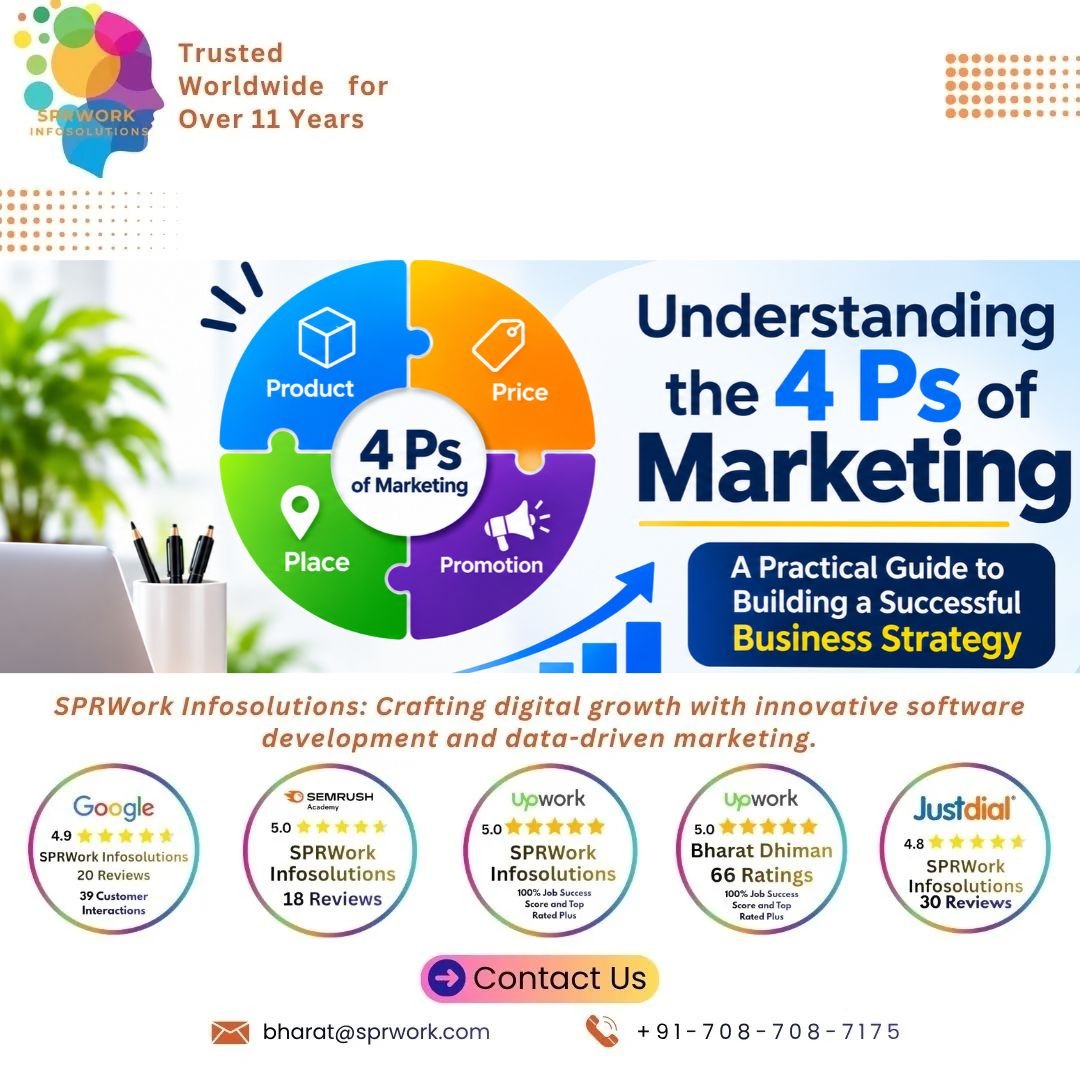
One of the most widely used marketing frameworks is the 4 Ps of Marketing: Product, Price, Place, and Promotion. These four elements help businesses plan their marketing activities and create a strong connection with their target audience.
For businesses looking to improve their marketing performance, understanding and applying the 4 Ps can make a significant difference. At SPRWORK Infosolutions, we help businesses develop effective digital marketing strategies that support their growth, improve online visibility, and reach the right customers.
What Are the 4 Ps of Marketing?
The 4 Ps of Marketing are four essential elements that help businesses create and manage an effective marketing strategy. Introduced as part of the traditional marketing mix, this framework provides a structured approach to understanding how a product or service should be positioned in the market.
Let’s understand each element and how businesses can use it successfully.
1. Product: Offer Something Customers Need
Product is the first element of the marketing mix. It refers to the goods or services a business offers to its customers. A successful product should solve a problem, fulfil a need, or provide value to its target audience.
Before developing or promoting a product, businesses should understand what their customers are looking for. They should also identify what makes their offering different from competitors.
For example, a software company may offer business management software designed to automate daily operations. Its value could include easy integration, useful features, better efficiency, and reliable customer support.
How to use Product successfully:
Understand your target audience and their requirements. Focus on product quality, usability, and customer experience. Collect customer feedback regularly and improve your offering based on changing market needs. Clearly communicate the benefits that make your product different.
2. Price: Set the Right Value
Price refers to the amount customers pay for a product or service. It directly influences purchasing decisions and can affect how customers perceive a brand.
Setting the right price requires understanding production costs, competitor pricing, customer expectations, and the value your product provides.
For example, a digital marketing agency may offer different service packages based on business requirements. A startup may prefer an affordable SEO package, while an established company may invest in a comprehensive digital marketing strategy.
How to use Price successfully:
Research competitor pricing and understand your customers’ budgets. Consider the value your product delivers rather than focusing only on offering the lowest price. Create suitable pricing packages, communicate what customers receive, and review your pricing strategy as market conditions change.
3. Place: Make Your Product Available
Place refers to the channels and locations through which customers can find and purchase your products or services.
Even a high-quality product may struggle to generate sales if customers cannot access it easily. Businesses need to identify where their target audience prefers to discover, research, and purchase products.
For example, an online clothing brand may sell through its website, social media platforms, and e-commerce marketplaces. Similarly, a service-based company can use its website, Google Business Profile, and other digital platforms to reach potential customers.
How to use Place successfully:
Identify the platforms your target audience uses regularly. Build a professional and user-friendly website. Make purchasing or contacting your business simple. Focus on search engine visibility and ensure customers can easily find information about your products and services.
4. Promotion: Communicate Your Value
Promotion includes all the activities a business uses to communicate with potential customers and encourage them to take action.
It helps businesses create awareness, generate interest, build trust, and increase sales. Without effective promotion, even a valuable product may remain unnoticed in a competitive market.
Digital marketing has made promotion more accessible through channels such as SEO, social media marketing, paid advertising, email marketing, and content marketing.
For example, a business launching a new mobile application can use social media campaigns, Google Ads, promotional videos, and SEO-focused blogs to reach potential users.
How to use Promotion successfully:
Develop a clear marketing message that communicates your product’s benefits. Choose promotional channels based on your target audience. Publish informative content, maintain an active social media presence, and use paid advertising when appropriate. Track campaign performance to understand which activities generate the best results.
How the 4 Ps Work Together
The four elements of marketing are interconnected. Focusing on only one element may not deliver the desired results.
For example, a business may develop an excellent product but struggle because its pricing is not suitable for its target audience. Similarly, competitive pricing may not generate sales if customers cannot find the product or do not know it exists.
An effective marketing strategy brings all four elements together. Businesses need the right product, appropriate pricing, accessible distribution channels, and effective promotional activities.
When these elements support each other, businesses can create a consistent customer experience and improve their chances of achieving long-term growth.
How SPRWORK Infosolutions Helps Businesses Build Better Marketing Strategies
Developing a successful marketing strategy requires proper planning, market understanding, and consistent execution. Businesses need to understand their audience, improve their online presence, and choose the right promotional channels.
SPRWORK Infosolutions provides digital marketing services designed to help businesses strengthen their online presence and reach potential customers.
From SEO and PPC management to website development, social media marketing, and AI integration, businesses can access solutions that support different stages of their digital growth.
Our focus is on understanding business requirements and developing practical strategies that connect marketing activities with business objectives.
Whether you are a startup looking to establish your online presence or an established company aiming to improve marketing performance, having the right digital strategy can help you move forward.
Build a stronger marketing strategy with SPRWORK Infosolutions. Connect with our team to explore digital marketing solutions for your business.
Frequently Asked Questions
1. What are the 4 Ps of Marketing?
The 4 Ps of Marketing are Product, Price, Place, and Promotion. They are four essential elements that help businesses develop an effective marketing strategy and reach their target audience.
2. Why are the 4 Ps important in marketing?
The 4 Ps help businesses understand customer requirements, determine suitable pricing, select distribution channels, and promote their offerings effectively. Together, they create a structured marketing approach.
3. Can small businesses use the 4 Ps of Marketing?
Yes. Small businesses can use the 4 Ps to identify their target customers, develop suitable products or services, establish competitive pricing, choose the right sales channels, and promote their offerings within their budgets.
4. How does digital marketing support the 4 Ps?
Digital marketing supports all four elements. Businesses can use SEO and content marketing to communicate product value, digital platforms to reach customers, online research to understand pricing expectations, and paid advertising to promote their offerings.
5. Are the 4 Ps still relevant in modern marketing?
Yes. The 4 Ps remain relevant because businesses still need to manage their products, pricing, distribution, and promotional activities. Modern technologies and digital platforms have expanded the ways businesses apply these principles.
6. How can a business improve its marketing mix?
A business can improve its marketing mix by researching customer needs, analysing competitors, reviewing pricing, choosing accessible distribution channels, and measuring promotional performance. Regular evaluation helps businesses adapt to changing customer expectations and market trends.
 Previous Post

Latest Blogs

How SPRWORK Infosolutions Helps Startups Build a Strong Digital Presence